
Craft, Fine Art, and the Rise of the Maker-Artist
As a contemporary abstract artist and printmaker based in Dublin, I often find myself working between two worlds: craft and fine art. My studio practice at Maluda is rooted in making, from printmaking and textiles to hand-built wall sculptures, while also incorporating digital processes such as laser cutting and 3D printing. This combination has led me to reflect on how the relationship between craft and fine art is evolving today.
I thought about these ideas a great deal while preparing my first solo exhibition, Navigating Space, which took place at Draíocht, Blanchardstown in the summer of 2025. The exhibition brought together works on paper, wood, and linen, exploring how space is constructed through colour, repetition, and form. The show reflected not only an interest in spatial abstraction, but also in the act of making itself.
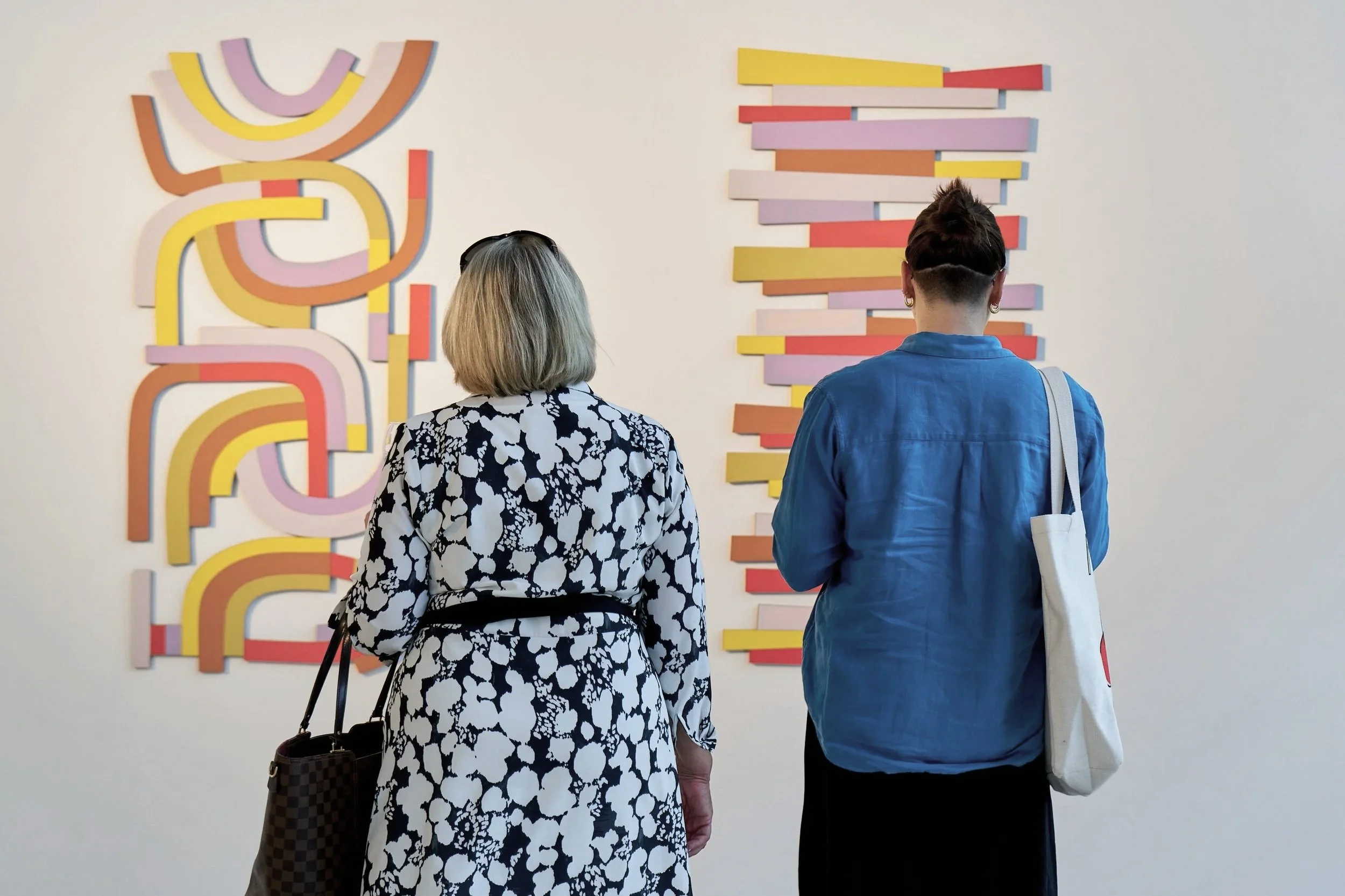
Still from Maria Atanacković’s first solo show Navigating Space, at Draíocht Blanchardstown, Dublin, 2025
Traditionally, craft has been associated with skill, material knowledge, and process, while fine art has been more closely aligned with concept, theory, and the gallery system. This institutional divide has often placed intellectual labour above material labour. As a result, process-driven or visually led art can be perceived as less conceptual, or less valuable, within certain fine art contexts.
Yet there is a growing return to material-based practices in contemporary art. In a digital-first culture, where so much of our experience is screen-based and fleeting, physical materials and time feel increasingly significant.
At the same time, digital tools are now part of many artists’ practices, mine included. This complicates traditional ideas of what “making” looks like. The act of making now exists across hand processes, machines, and software.
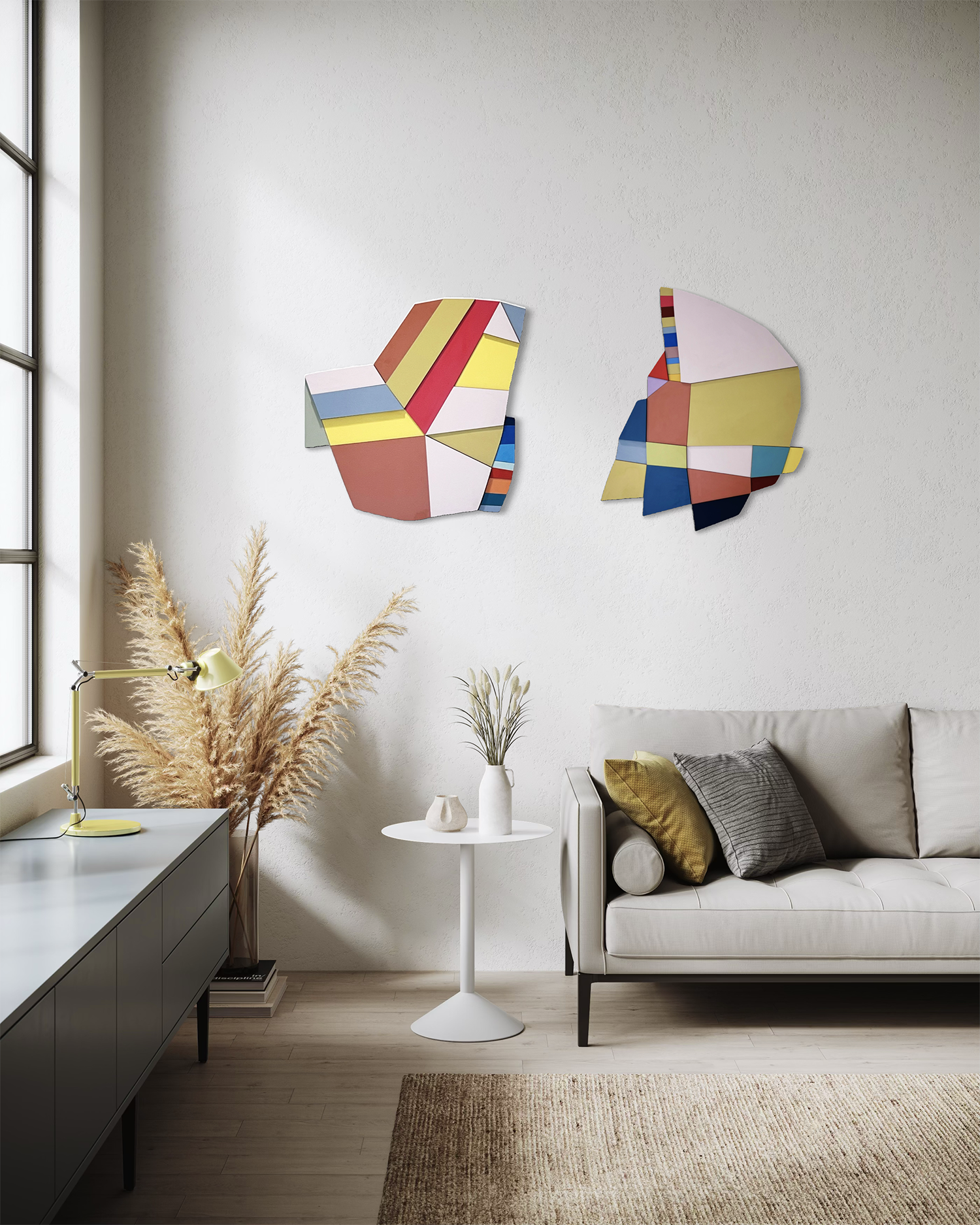
“Aria” and “Aviate”, Birch plywood and Formica wall sculptures by Maria Atanacković, 2025. Made using laser cutting and hand building processes.
Importantly, these technologies also change access. Tools such as laser cutting and 3D printing can save time, streamline production, and remove the need, in my case, for a fully equipped woodworking studio with extensive machinery. 3D printing allows me to prototype forms quickly and efficiently, testing ideas before committing to final materials. Rather than distancing me from craft, these tools expand what is possible within it.
This raises important questions: Is the value of a work found in the process or in the finished piece? Do the tools used by maker-artists change the meaning of the work? And is it limiting to reject new technologies in favour of traditional ones?
For me, the answer is not about choosing one over the other. Digital tools do not replace craft, they extend it. They collaborate with my printmaking and hand construction, each informing and supporting the other. If the process is intentional and connected to the ideas behind the work, then making itself becomes a form of thinking.
This hybrid approach also raises broader questions: where do maker-artists sit within the contemporary art world? I believe meaning can exist through material, structure, and process, not only through written theory. Visual and material intelligence are just as powerful as language.
Perhaps the most interesting place to work today is in the space between categories, where craft meets fine art, and where making becomes both method and meaning. Through my practice, I continue to navigate this space, using abstraction, material, and process to explore connection, belonging, and how we move through the world.
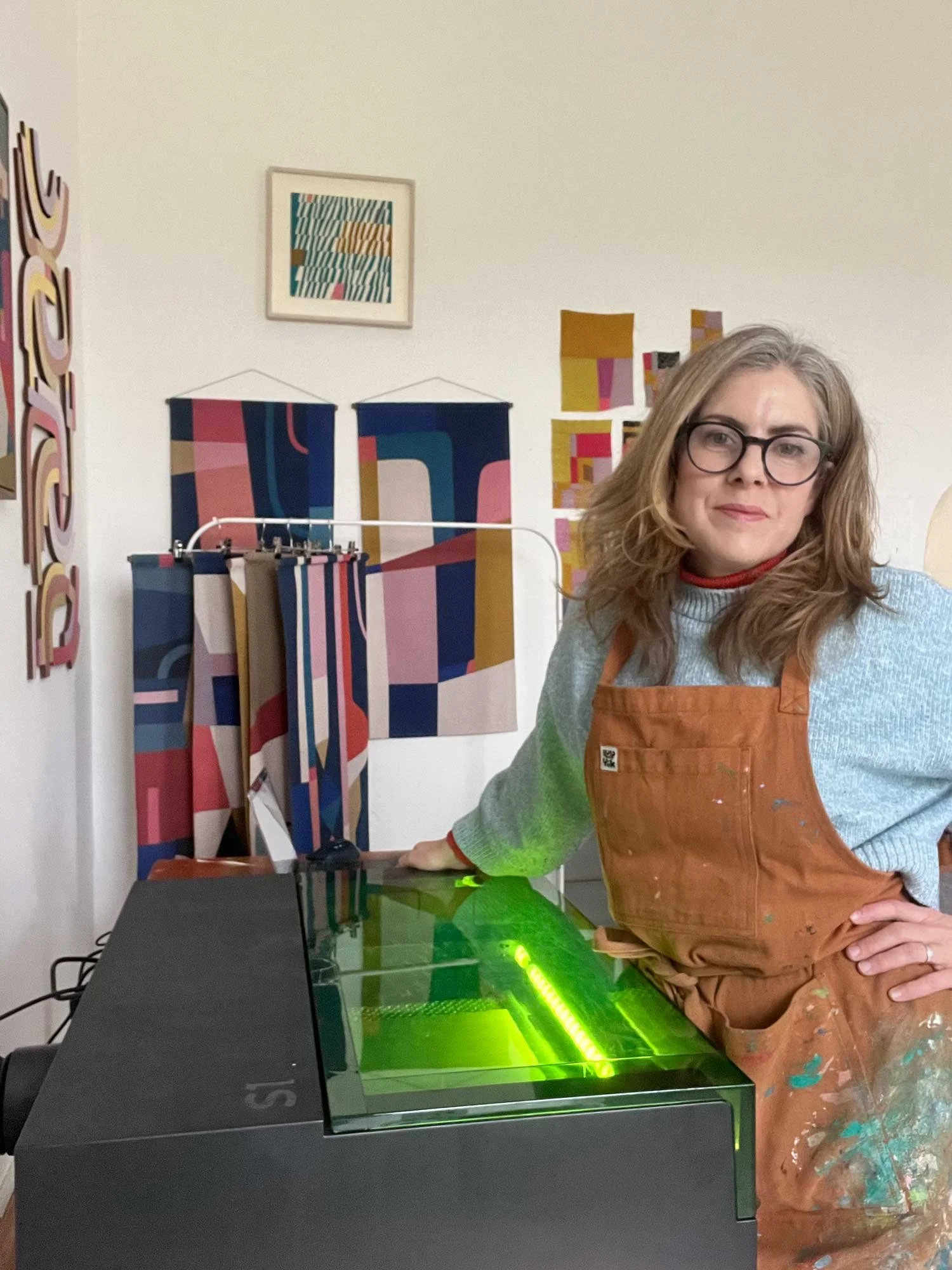
Artist and machine
